
AKA Acoustics Named Exclusive Australian Distributor for Phonic Acoustic Ceiling Tiles
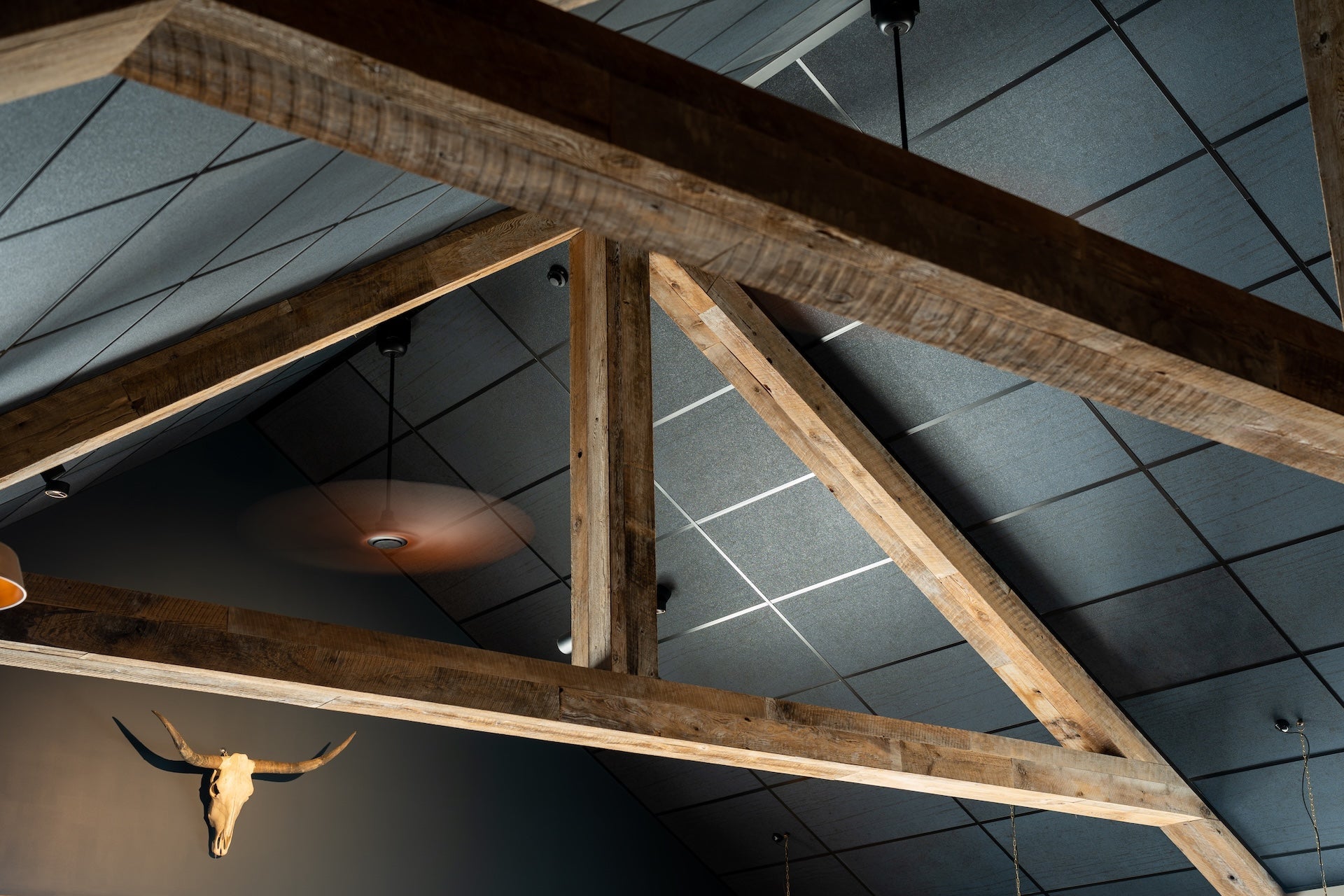
AKA Acoustics is now the exclusive Australian distributor for Phonic Acoustic Ceiling Tiles by T&R Interior Systems. Phonic is a tested acoustic ceiling tile range for commercial, education, healthcare, hospitality, workplace and specialist interior projects where the ceiling must do more than fill a grid. The range includes high-absorption tiles, high-CAC privacy tiles, hygiene tiles, direct-fix options, impact-resistant sports panels and economy commercial tiles. For Australian project teams, the significance is not only access to another ceiling product. It is access to a specification-ready acoustic ceiling system backed by local technical distribution, documentation support and AKA’s broader capability across acoustic design, product selection, procurement, site coordination and performance verification.
Most acoustic ceiling decisions are made too late. A tile is nominated, substituted, value-managed or accepted because it fits the grid and looks acceptable. That approach can work in low-risk spaces. It is less defensible in classrooms, boardrooms, clinics, open offices, hospitality spaces, studios, auditoria, medical environments and high-value commercial fit-outs where reverberation, speech privacy, hygiene, durability and installation evidence matter.
Phonic gives architects, builders, designers and facilities teams a more deliberate route: start with the room problem, select the tile by acoustic function, check the NRC and CAC data, confirm mounting conditions, and support the specification with the right technical documentation before procurement and installation.
Specifying Phonic Acoustic Ceiling Tiles in Australia?
AKA Acoustics supplies Phonic in Australia and coordinates the technical pathway from product selection to specification support, procurement and project delivery.
Contact AKA AcousticsCall 1300 039 639What are Phonic Acoustic Ceiling Tiles?
Phonic Acoustic Ceiling Tiles are a range of glasswool, mineral fibre, composite, hygiene, direct-fix and specialist ceiling tiles developed by T&R Interior Systems. The range is designed for projects where the ceiling must contribute to acoustic comfort, speech clarity, privacy, durability, hygiene performance and architectural finish.
The key distinction is that Phonic is not a single commodity tile. It is a product family. Different tiles are used for different acoustic and operational requirements:
- High absorption where reverberation and speech clarity are the priority.
- High attenuation where room-to-room transfer through the ceiling plenum is a risk.
- Direct-fix ceilings where an exposed suspended grid is not wanted.
- Hygiene and wipe-clean surfaces for medical, laboratory, kitchen and food environments.
- Impact-resistant tiles for sports halls, schools and demanding public interiors.
- Economy commercial options where cost discipline still needs acoustic evidence.
That range-based approach is why Phonic is useful for real projects. A classroom, consultation room, gymnasium, tenancy meeting room, lobby, laboratory and open-plan workplace do not need the same ceiling. They need the right ceiling for the acoustic problem.

Why AKA Acoustics is distributing Phonic in Australia
AKA Acoustics is not positioning Phonic as a simple catalogue product. The Australian market already has access to large ceiling brands, standard mineral fibre tiles, polyester panels, imported acoustic products and commodity grid systems. The opportunity with Phonic is different: a tested acoustic ceiling tile range that can be specified, supplied and supported through an acoustic-led delivery pathway.
AKA works across acoustic engineering, specialist material supply, project coordination, construction interfaces and commissioning. That matters because acoustic ceiling performance is not created by the tile alone. It depends on the tile, grid, plenum condition, wall height, services penetrations, mounting method, ceiling void, adjacent rooms, installation quality and whether the specification survives substitution.
The two acoustic numbers that matter: NRC and CAC
Acoustic ceiling tiles are often discussed as though there is one performance number. There are usually two numbers that matter: NRC and CAC.
| Metric | What it means | Why it matters | Typical room priority |
|---|---|---|---|
|
NRC Noise Reduction Coefficient |
How much sound the ceiling tile absorbs inside the room. | Higher NRC generally means less reverberation, better speech clarity and a calmer room. | Open offices, classrooms, libraries, clinics, reception areas, studios, meeting rooms and hospitality spaces. |
|
CAC Ceiling Attenuation Class |
How well the ceiling limits sound transfer through a shared ceiling plenum. | Higher CAC helps reduce speech transfer between adjacent rooms where partitions stop at the ceiling grid or where plenum paths exist. | Private offices, medical consulting rooms, HR rooms, legal rooms, tenancies, boardrooms and confidential spaces. |
The common specification error is selecting a high-NRC tile and assuming that it will also deliver speech privacy. Absorption and attenuation are different acoustic functions. A ceiling can be excellent at controlling reverberation while still allowing sound to pass through the plenum into adjacent rooms. Conversely, a dense washable tile may provide useful attenuation but little room absorption. Phonic is valuable because the range includes both absorption-led and attenuation-led products, allowing the ceiling to be selected by function rather than habit.
The Phonic range at a glance
The Phonic range covers multiple ceiling conditions, from high-performance absorption through to hygiene, sports impact, direct-fix and privacy-led applications. The numbers below are a practical selection guide only. Final specification should always confirm the current Technical Data Sheet, thickness, edge detail, mounting method, grid compatibility, fire documentation and project-specific requirements.
| Phonic product | Acoustic role | Indicative performance position | Best fit |
|---|---|---|---|
| Phonic Absorb | High absorption acoustic ceiling tile. | NRC up to 0.95, with CAC performance dependent on thickness and configuration. | Offices, education, health, reception areas, libraries and commercial interiors where reverberation control is the primary requirement. |
| Phonic Combo+ | Composite absorption and attenuation tile. | Strong NRC and high CAC, with enhanced CAC possible when used with the correct overlay or plenum treatment. | Offices, boardrooms, schools, consulting rooms and fit-outs where both room comfort and speech privacy matter. |
| Phonic Direct Fix | Direct-fix absorption without an exposed grid. | Useful absorption, with performance influenced by direct-fix or batten/cavity mounting. | Refurbishments, feature ceilings, education spaces and interiors where a monolithic ceiling plane is preferred. |
| Phonic Harmony+ | Balanced absorption and attenuation. | Mid-to-high acoustic comfort with useful CAC in a practical profile. | Commercial offices, shared workspaces and projects where both numbers matter but the highest-performance tile is not required. |
| Phonic Impact | Impact-resistant acoustic sports tile. | High absorption with stronger face durability for demanding environments. | Gymnasiums, sports halls, schools, community halls and public interiors where tile dislodgement or surface impact must be managed. |
| Phonic Tech | Wipe-clean acoustic tile or panel. | High acoustic absorption with a durable, cleanable face. | Laboratories, kitchens, workshops, hygiene spaces and technical facilities where acoustic performance cannot be sacrificed for cleanability. |
| Phonic Clean | Hydrophobic hygiene acoustic tile. | Useful absorption with hygiene, wipeability and cleanroom-oriented documentation. | Medical centres, hospitals, laboratories, cleanroom-adjacent interiors and projects where moisture resistance and cleanability matter. |
| Phonic Gypsum Vinyl | Dense washable high-CAC tile. | Low absorption by design, with high attenuation and washability. | Retail, food service, high-humidity interiors and privacy-led spaces where a reflective, cleanable tile is acceptable. |
| Phonic Fine Fissured / NDF | Economy commercial mineral fibre options. | Moderate absorption and attenuation for cost-sensitive commercial fit-out. | General commercial ceilings where standard grid compatibility, durability and documented acoustic performance are required. |
| Phonic Dai Lotone | Tongue-and-groove direct-fix mineral fibre tile. | Moderate absorption for direct-fix retrofit applications. | Retrofits, refurbishments and interiors where a suspended grid is not desired or available. |
Why Phonic can be a better specification than conventional ceiling tiles
The strongest argument for Phonic is not that every Phonic tile beats every Armstrong, Rockfon or other competitor tile on every number. That would be the wrong way to specify ceilings. The stronger and more defensible point is this: Phonic gives Australian project teams a tested, range-based, function-led ceiling system backed by AKA’s local technical distribution and acoustic delivery capability.
Armstrong Ceilings and Rockfon both have capable acoustic ceiling products. For many projects, they remain legitimate options. Phonic becomes the better choice when the project needs a practical combination of acoustic performance, CAC strategy, hygiene options, standard-grid compatibility, documentation support, Australian distribution and technical coordination through AKA Acoustics.
| Comparison point | Conventional market issue | Phonic advantage |
|---|---|---|
| NRC and CAC in the same conversation | Many ceiling specifications focus on absorption and treat privacy later, after complaints occur. | Phonic’s range makes the NRC/CAC decision explicit, with absorption-led, attenuation-led and composite options available for different room functions. |
| Range depth by room problem | A single default tile is often used across classrooms, offices, meeting rooms, clinics and corridors even when the acoustic problems differ. | Phonic allows selection by function: absorption, privacy, direct-fix, hygiene, sports impact, economy or washable high-CAC performance. |
| Australian technical distribution | A product-only procurement path may leave the architect, builder or consultant to chase data, suitability and substitution evidence separately. | AKA Acoustics supplies Phonic in Australia and connects product selection to acoustic intent, documentation, procurement and delivery coordination. |
| Standard-grid practicality | High-performance substitutions can become difficult when they require unexpected ceiling system changes or late coordination. | Phonic includes options designed for standard suspended grid applications, along with direct-fix products where exposed grid systems are not desired. |
| Hygiene and specialist interiors | Cleanability, moisture, microbial performance and acoustic comfort are often treated as competing priorities. | Phonic Clean, Phonic Tech and Phonic Gypsum Vinyl give specifiers different hygiene pathways depending on whether absorption, washability or attenuation is the priority. |
| Substitution control | A “similar approved” substitution may match tile size and appearance but fail the acoustic, hygiene, fire or installation intent. | Phonic specifications can be framed around measured performance, mounting condition, edge detail, grid compatibility and required documentation rather than brand name alone. |
Phonic vs Armstrong Ceilings, Rockfon and commodity acoustic tiles
A fair comparison starts with the project requirement. Armstrong and Rockfon both publish high-performing acoustic ceiling products. Some competitor products achieve very strong absorption, and some systems can achieve strong CAC when the whole ceiling assembly is considered. The question is not “which brand has the biggest number on one product page?” The question is “which product range gives this project the clearest route to the required outcome?”
| Option | Strength | Where to be careful | Where Phonic is compelling |
|---|---|---|---|
| Armstrong Ceilings | Large global ceiling range, strong technical documentation, mature commercial specification presence. | The correct Armstrong product must still be selected by room function. High absorption alone does not automatically resolve plenum privacy. | Phonic is compelling where AKA’s Australian technical supply, acoustic-led specification support and range-level NRC/CAC strategy are valuable to the project team. |
| Rockfon | Strong stone wool acoustic ceiling products, premium visual options and high absorption products in selected ranges. | Panel performance and system performance should not be confused. The full assembly, plenum condition and installation details still matter. | Phonic is compelling where a project wants a practical alternative supported by an Australian acoustic distributor who can connect the ceiling selection to the wider acoustic brief. |
| Commodity mineral fibre tiles | Low-risk familiarity, broad availability and cost discipline for basic commercial ceilings. | Often selected for price, not acoustic outcome. Test data, substitution evidence, humidity performance and CAC may be incomplete or misunderstood. | Phonic gives project teams a more defensible specification where performance data, durability, hygiene, privacy or room comfort matter. |
| Generic acoustic panels | Useful for wall and ceiling absorption, visual features and retrofit treatment. | Panels are not automatically a substitute for a ceiling tile with the correct fire, grid, hygiene, CAC or installation documentation. | Phonic is stronger when the ceiling itself must remain part of the building system while delivering measurable acoustic performance. |
This is the correct competitive position: Phonic is not merely “another ceiling tile”. It is a specification pathway for project teams who need the ceiling to absorb sound, control plenum transfer, satisfy practical installation requirements and be supported by a technical distributor that understands acoustic risk.
How to choose the right Phonic tile
Start with the acoustic problem, not the product name. The correct tile depends on what the room is trying to achieve.
| Room problem | Design priority | Likely Phonic direction |
|---|---|---|
| Open office, library, classroom or reception area feels loud and tiring. | Reduce reverberation and improve speech clarity. | Phonic Absorb, Phonic Harmony+ or Phonic Combo+ depending on privacy requirements. |
| Private offices, HR rooms or medical consultation rooms need better confidentiality. | Control room-to-room sound transfer through the plenum. | Phonic Combo+, Phonic Harmony+ or Phonic Gypsum Vinyl, subject to absorption and hygiene requirements. |
| Gymnasium, school hall or sports facility has excessive noise and tile impact risk. | High absorption, durable face and restraint against dislodgement where required. | Phonic Impact or project-specific impact-resistant Phonic configurations. |
| Medical, laboratory, kitchen or food-service ceiling needs hygiene and cleanability. | Wipeability, moisture resistance, hygiene documentation and acoustic performance. | Phonic Clean, Phonic Tech or Phonic Gypsum Vinyl depending on whether absorption or washability is more important. |
| Retrofit ceiling needs acoustic improvement but no exposed grid. | Direct-fix absorption and clean visual integration. | Phonic Direct Fix or Phonic Dai Lotone, subject to substrate and mounting conditions. |
| General commercial fit-out needs a practical ceiling with documented acoustic data. | Balanced cost, durability, standard grid compatibility and basic acoustic performance. | Phonic Fine Fissured or Phonic NDF where a higher-performance tile is not required. |

What to specify, not just what to buy
A strong Phonic specification should define the required outcome and the evidence behind it. At minimum, architects, builders and consultants should confirm:
- Product name and current Technical Data Sheet.
- NRC requirement and the test method or mounting condition behind it.
- CAC requirement where room-to-room privacy is required.
- Tile thickness, edge detail, module size and grid compatibility.
- Whether the tile is suspended, direct-fixed, batten-mounted or installed with a cavity.
- Fire documentation required for the project and jurisdiction.
- Humidity, hygiene, cleanability or antimicrobial requirements where relevant.
- VOC, emissions, recycled content and Green Star-related documentation where applicable.
- Seismic, restraint, clip or impact requirements for sports and public interiors.
- Responsibility for substitution review, installation coordination and completion evidence.
The more sensitive the space, the more important this becomes. In an open office, the issue may be acoustic comfort. In a medical consultation room, it may be confidentiality. In a laboratory, it may be hygiene. In a school hall, it may be impact and reverberation. A generic “acoustic ceiling tile” clause is unlikely to protect all of those outcomes.
Need the right Phonic tile specified, not just supplied?
AKA coordinates acoustic requirements, product selection, documentation, procurement and delivery interfaces so ceiling performance is protected through the project.
Contact AKA AcousticsCall 1300 039 639Why substitution risk matters
Ceiling tile substitution often looks harmless. The replacement fits the grid, appears similar, arrives faster or reduces a procurement line item. The risk is that the substitute may not match the acoustic function of the original specification.
A substitute tile may have a similar NRC but lower CAC. It may have acceptable absorption but insufficient hygiene documentation. It may suit standard office conditions but not a high-humidity environment. It may be visually similar but require a different edge profile, grid, restraint detail or mounting condition. It may have a published laboratory number that does not correspond to the installed build-up.
This is where Phonic’s documentation-led approach matters. A ceiling tile should be accepted because it satisfies the room function, not because it looks similar in a schedule.
Why the delivery model matters
Acoustic ceiling performance is often lost between design, procurement and installation. The acoustic consultant may define the requirement. The architect may nominate a product. The builder may seek an alternative. The ceiling contractor may install according to site constraints. Services trades may penetrate the plenum. The final space may then be judged by occupants, not by the original schedule.
AKA’s role is to reduce that handover risk by connecting acoustic intent to product selection, documentation, procurement and delivery coordination.
| Project model | Typical strength | Common risk | Where AKA adds value |
|---|---|---|---|
| Separate acoustic consultant | Independent advice, modelling and reporting. | Design intent can be diluted during procurement, substitution or installation. | AKA connects the acoustic requirement to product selection, supply, contractor support and completion evidence. |
| Builder-led procurement | Programme control and procurement efficiency. | Acoustic ceiling tiles may be treated as interchangeable finish items. | AKA reviews the acoustic consequence of product changes before they become installed defects. |
| Product supplier only | Material availability and logistics. | The tile may be selected without considering room function, mounting method, plenum transfer or hygiene requirements. | AKA supplies Phonic with acoustic judgement, specification support and integration into the wider project requirement. |
| AKA integrated delivery model | Engineering, product selection, supply coordination and delivery support aligned from the start. | Requires early engagement and a clear brief. | One coordinated pathway from acoustic intent to installed ceiling performance. |
How AKA Acoustics approaches Phonic specification, supply and delivery
AKA Acoustics works as a turnkey acoustic delivery partner, not a passive product reseller. For Phonic projects in Australia, AKA coordinates the pathway across acoustic brief, technical product selection, documentation review, supply, installation interface, contractor support and performance risk management.
That may include:
- Identifying whether the primary issue is reverberation, privacy, hygiene, impact, direct-fix installation or a combination of requirements.
- Selecting the appropriate Phonic tile rather than defaulting to a generic acoustic panel.
- Reviewing NRC and CAC requirements against the room function.
- Confirming current technical data, mounting conditions, fire documentation and edge/grid compatibility.
- Supporting architects, builders and designers with substitution review and specification wording.
- Coordinating supply with the broader construction and fit-out programme.
- Advising on interfaces with partitions, services, plenum conditions, lighting, AV, HVAC and specialist trades where required.
- Supporting handover, commissioning or acoustic verification where the project demands it.
This is particularly relevant for high-value workplaces, schools, healthcare facilities, studios, theatres, hospitality spaces and public interiors where the cost of acoustic failure is not limited to the ceiling tile. Complaints, speech privacy issues, reverberant rooms, late-stage substitutions and rework can all affect programme, reputation and user experience.
Where Phonic is most useful
Phonic is suited to projects where the ceiling has a real performance role. Typical applications include:
- Commercial offices requiring reverberation control, speech comfort and meeting room privacy.
- Education facilities including classrooms, libraries, learning commons, music rooms and school halls.
- Healthcare and medical interiors where cleanability, patient comfort and speech privacy are important.
- Hospitality and retail spaces where acoustic comfort affects perceived quality and dwell time.
- Sports and community facilities where reverberation and impact resistance need to be addressed together.
- Studios, cinemas and performance-adjacent spaces where ceiling performance must be considered as part of the wider acoustic system.
- Tenancy fit-outs where sound transfer through shared ceiling plenums can undermine privacy between rooms.
Product information
For product supply, technical selection or project-specific Phonic documentation in Australia, speak with AKA Acoustics.
- View the T&R Interior Systems collection on AKA Acoustics
- View the T&R Interior Systems ceiling product range
Frequently asked questions
Who supplies Phonic Acoustic Ceiling Tiles in Australia?
AKA Acoustics is the exclusive Australian distributor for Phonic Acoustic Ceiling Tiles by T&R Interior Systems. AKA supplies the range and supports Australian project teams with technical product selection, specification support, procurement coordination and acoustic delivery advice.
Are Phonic Acoustic Ceiling Tiles better than Armstrong Ceilings?
Phonic is not better in every possible comparison, because Armstrong has several strong acoustic ceiling products. Phonic is the better specification where the project needs a function-led acoustic ceiling range, local Australian technical distribution through AKA, strong NRC/CAC selection pathways, hygiene and direct-fix options, and support that connects the product to the wider acoustic brief.
Are Phonic tiles better than Rockfon?
Rockfon has capable stone wool acoustic ceiling products, including high-absorption ranges. Phonic is compelling as an alternative where Australian supply, documentation support, product range breadth, CAC strategy, hygiene options and acoustic-led delivery coordination are more important than simply selecting a globally recognised ceiling brand.
What is the difference between NRC and CAC in ceiling tiles?
NRC describes how much sound the ceiling absorbs inside a room. CAC describes how much the ceiling helps reduce sound transfer through the ceiling plenum between adjacent rooms. A good office, classroom or clinic specification may need both numbers. High NRC alone does not guarantee speech privacy.
Which Phonic tile is best for open offices?
Open offices usually need high absorption to reduce reverberation and general acoustic build-up. Phonic Absorb, Phonic Harmony+ and Phonic Combo+ are common starting points, depending on whether the project also needs room-to-room privacy, tenancy separation or higher CAC performance.
Which Phonic tile is best for medical or hygiene spaces?
Phonic Clean, Phonic Tech and Phonic Gypsum Vinyl are the key hygiene-oriented options. The right selection depends on whether the project prioritises absorption, cleanability, moisture resistance, washability or plenum attenuation. AKA should review the room function and compliance requirements before final specification.
Can Phonic tiles improve speech privacy?
Yes, if the correct CAC-focused tile and ceiling build-up are selected. Speech privacy depends on more than the tile. Partition height, ceiling void, services penetrations, plenum barriers, wall junctions and installation quality all affect the final result. Phonic Combo+, Harmony+ and Gypsum Vinyl may be relevant depending on the room and design objective.
Can Phonic tiles be used in existing ceiling grids?
Many Phonic products are designed for standard suspended ceiling grid applications, but final compatibility must be confirmed against tile size, thickness, edge detail, grid type, restraint requirements and site conditions. AKA can review the existing ceiling condition before supply or substitution.
Do acoustic ceiling tiles soundproof a room?
No ceiling tile should be described as “soundproofing” by itself. Acoustic ceiling tiles can reduce reverberation and, where selected for CAC, help limit some plenum sound transfer. True sound isolation depends on the full system: partitions, slabs, doors, glazing, penetrations, services, structure, flanking paths and installation detailing.
How do I specify Phonic Acoustic Ceiling Tiles for a project?
Start by defining the room function, NRC target, CAC target, hygiene or impact requirements, ceiling grid condition, mounting method and required documentation. Then select the Phonic product that matches the performance objective. AKA Acoustics can coordinate technical selection, supply and specification support for Australian projects.
Talk to AKA about Phonic Acoustic Ceiling Tiles
For Australian projects where ceiling performance, documentation, supply and site practicality need to align, contact AKA Acoustics before the tile is specified, substituted or procured.
Contact AKA AcousticsCall 1300 039 639
Share:
Devialet & AKA Acoustics – Elevating High-Performance Spaces with Unrivalled Audio
Acoustics Futures - July 2026: Sound Stops Being an Afterthought