There is one thread running through almost everything that happened in acoustics this year, and it is not a new material or a new algorithm. It is a change in when sound gets considered.
For a long time, acoustics was the discipline you called last. After the architecture was drawn. After the fit-out was priced. After the building was occupied and someone finally said the room was too loud.
In July 2026 that order is inverting on five separate fronts at once. The fronts are not talking to each other, which is exactly why the pattern is worth naming.
The five fronts are these. Australia's building code held its acoustic numbers still while nearly every reference point around it moved. New South Wales rewired the statutory rules for live venues and their neighbours.
Restaurants and offices started retrofitting around sound, because noise became a measurable cost. Materials and construction began building acoustic function in rather than bolting it on. And the technology used to predict sound shifted from something you measure after the fact to something you simulate before a brick is laid.
None of these is a headline on its own. Together they describe a market that has decided sound is a first-order design input, not a warranty problem.
This edition works through each front in turn, drawing a clear line between what is real and shipping, what is a signal worth watching, and what is a press release wearing a lab coat. Every load-bearing claim below is sourced. Where the evidence is thin, we say so, because the most useful thing a consultant can tell you this year is which trends survive contact with a real project.
Why did Australia's building code hold still while everyone else moved?
The short answer: the National Construction Code's acoustic floor did not change in 2025. Nearly every other reference point around it did, which is the more important story for anyone specifying a building that completes in 2027 or later.
The National Construction Code 2025 was published for preview on 1 February 2026 and is open for state and territory adoption from 1 May 2026 (Standards Australia). Its acoustic core, Part F7, keeps the same numeric Deemed-to-Satisfy criteria as NCC 2022.

Floors separating sole-occupancy units (apartments in Class 2 buildings, hotel and care-facility rooms in Class 3) must still achieve a weighted standardised impact sound pressure level (LnT,w) of not more than 62. Separating walls must still achieve Rw + Ctr of not less than 50 (ABCB, NCC 2025 Part F7).
The one acoustic-relevant change in the amendments register is quiet but real. Specification 28 now points to the 2024 editions of AS ISO 717.1 and AS ISO 717.2, the airborne and impact sound-rating methods (ABCB, List of amendments).
The headline numbers held. The methodology they are tested against moved underneath them. Anyone commissioning compliance test reports should confirm their lab references the current edition.
The pressure to tighten the numbers is now on the public record. A November 2024 paper by three ATP Consulting Engineers acousticians, presented to the Australian Acoustical Society, documented three Gold Coast case studies where buildings met the letter of the code and still generated occupant complaints (Proceedings of Acoustics 2024).
It formally proposed the next code cycle tighten the impact-sound limit from LnT,w 62 to LnT,w 55, tighten service-penetration insulation, and lift plant-room wall insulation. NCC 2025 did not adopt this. It is the citable argument for what the next edition, due around 2028, may target, and a concrete talking point that the current minimum is more generous than what practitioners already recommend.
There is a timing wrinkle in New South Wales that changes how you should plan. NSW is not moving straight to the 2025 code. State variations publish by 1 May 2026, but formal NSW commencement is 1 May 2027, a deliberate 12-month transition the government frames as minimising future compliance risk (NSW Government).
For any NSW project straddling that window, the acoustic strategy that matters is the one that satisfies the code in force at completion, not the one in force at DA lodgement.
Meanwhile the schemes that sit above the code are quietly promoting acoustics from a sub-clause to a headline. Green Star Buildings v1.1, released in December 2025, renamed its acoustic credit from "Privacy" to "Sound transmission" to clarify what it actually measures (GBCA change log).
WELL v2 pulled acoustics out of the old "Comfort" concept and gave Sound its own standalone concept, with a sound-mapping precondition and a background-noise-level optimisation (IWBI, WELL v2). NABERS Indoor Environment continues to rate acoustic comfort as one of five separately scored factors (NABERS).
The measurement standards underneath are moving too. ISO 3382-1, the method governing how room-acoustic parameters are measured in performance spaces, is under active revision, with a committee draft broadening its title from "Performance spaces" to "Spaces for music, speech and communication" (Geonoise Asia, 23 September 2025).
And Australia's most-cited internal-noise design standard, AS/NZS 2107, is now approaching a decade old at its 2016 edition, against a historical revision cadence of 13 to 16 years (AcousPlan).
The pattern is a separation. The compliance floor and the design target have pulled apart. Certification schemes, disputes and the profession's own literature are all benchmarking above the Deemed-to-Satisfy minimum, and the measurement standards beneath them are being rewritten.
So for NSW work completing after May 2027, lock the acoustic strategy against the 2025 code, not the one current at lodgement. On any project chasing Green Star or WELL, scope acoustics as a discrete deliverable early, because both schemes now treat it as one.
And on residential and hotel work, treat LnT,w 62 as a ceiling to beat, not a target to reach. A lower number is a better outcome. Designing to the code minimum is, increasingly, designing to the lowest number anyone in the room will accept.
What do the NSW night-time economy reforms mean for venues and their neighbours?
Directly: New South Wales spent the last year building statutory machinery to protect existing venues from noise complaints and to let councils set their own precinct sound rules. It did so while a multi-billion-dollar pipeline of new performance and civic buildings entered design. Acoustics is now a live input at the planning-policy layer, not just the building layer.
The 24-Hour Economy Legislation Amendment (Vibrancy Reforms) Act 2025 passed in November 2025. From 3 December 2025, restrictive development-consent and plan-of-management conditions that prohibited live entertainment at hotels, clubs and small bars were switched off (NSW Government, Vibrancy Reforms).
The same package created the framework for councils to establish Special Entertainment Precincts: defined areas where a council-authored management plan sets sound conditions and trading hours in place of standard planning controls, supported by mandatory guidelines and an optional Acoustic Toolkit (NSW Government, Special Entertainment Precincts).
Councils are moving. Northern Beaches Council's Manly precinct trial is timed for mid-2026 (Northern Beaches Council), with the framework itself set out on the state planning portal (NSW Planning).

Worth naming honestly: NSW has not adopted the "agent of change" principle by name, the rule that whoever introduces a new use into an existing noise environment bears the attenuation cost. That remains a Victorian instrument, documented in Planning Practice Note 81 (Victorian Government, PPN81).
NSW's reforms reach a similar practical outcome through the condition switch-off and the precinct framework, but the explicit statutory shield a Victorian venue enjoys is not yet written into NSW law by that name. If you are advising a residential developer building near an existing venue in NSW, that gap is the risk to price.
The momentum is broader than venues: the NSW EPA also ran consultation on a draft Noise Control Regulation 2026 in early 2026, touching neighbourhood, vehicle and equipment noise (NSW Government). Three noise-regulation workstreams in a single year is not a coincidence.
At the same time, the pipeline that will need acoustic design is large and mostly public. The NSW 2026-27 Budget committed a record 9.2 billion dollars over four years to new and upgraded public schools (School Infrastructure NSW) and 3.6 billion dollars in a single year to hospital infrastructure, inside a four-year pipeline of 32 new or upgraded hospitals (reported via Sydney Times).
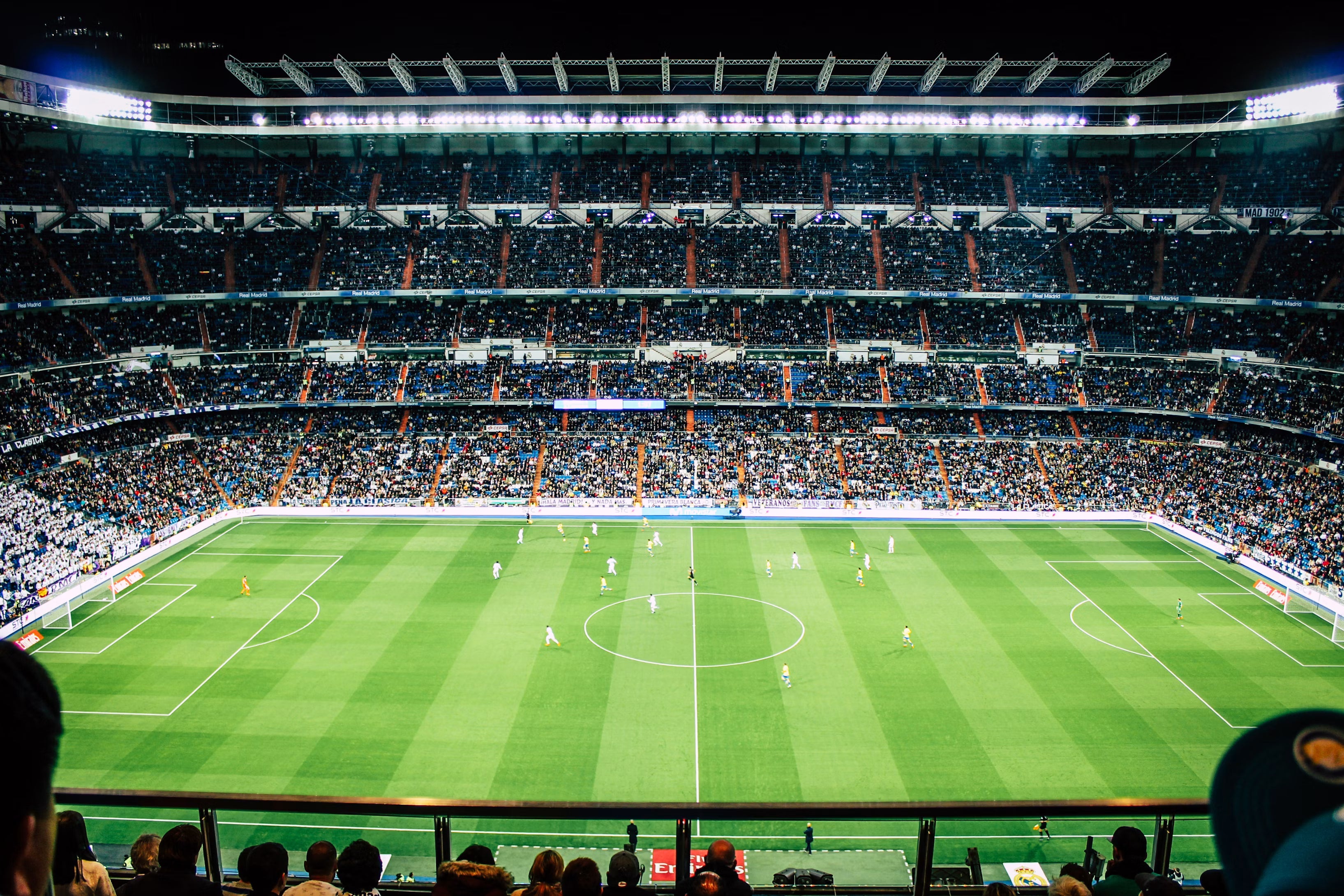
Four new arenas are moving from commitment to procurement across several states: a 12,000-seat Newcastle Arena (Australasian Leisure Management), a 17,000-seat arena anchoring Brisbane's Gabba precinct (Queensland Government), a larger WIN Arena in Wollongong (NSW Government) and the Macquarie Point Stadium in Hobart (Infrastructure Pipeline).
Australia's marquee cultural building of the year makes the point directly. Powerhouse Parramatta, a 915 million dollar project with a 900-seat theatre and one of the country's largest column-free exhibition spaces, opens late 2026 with Arup credited for acoustics (ArchitectureAU).
The commercial point is timing. Acoustic input lands at the brief and precinct-plan stage, long before construction documentation. For a council writing SEP sound criteria, the window is open right now.
If you operate a venue, the reforms have shifted the ground in your favour, but the protection is precinct-specific, so read your council's plan rather than assuming the general relief applies to your site. If you advise developers near venues, treat the missing "agent of change" wording as unfinished business that could still land.
And if you are a council or a civic-project team, the sound criteria you write now are the ones you will defend for a decade. That is the argument for getting the acoustic input early, rather than after the first complaint.
Why are restaurants and offices suddenly redesigning for sound?
Because noise stopped being a matter of taste and became a measurable cost: in reviews, in staff concentration, and in whether people show up at all. Two of the most-occupied building types in the economy, the restaurant and the open-plan office, are being retrofitted around sound in 2026, and the framing has shifted from comfort to commerce.
The restaurant data is the sharper of the two, with a caveat worth stating up front. It is overwhelmingly from the United States, and no equivalent Australian restaurant-noise survey was located for this edition.

The figures below all reach us through a single Boston Globe opinion column that pulled the US evidence together (Boston Globe, 27 June 2025). A 2018 study of more than 1,300 New York restaurants found average noise levels of 77 dBA, with a quarter of venues above 81 dBA.
The crowdsourced SoundPrint app had accumulated roughly 220,000 loudness submissions by mid-2025, averaging 75 to 77.5 dBA, above the mid-70s dBA range at which speech intelligibility breaks down.
A cited 2024 study reported that noise complaints in reviews rise sharply from around 70 dBA and correlate with a full star lower in average rating, and US time-use data shows in-person socialising fell 20 per cent between 2003 and 2023.
The number that should hold an operator's attention is the star. A full point of average rating is a revenue line, and the reviews that pull it down keep naming the noise.
The office story arrived even more recently. A "sound-first" approach to office redesign is now a named 2026 trend, triggered by the mismatch between the quiet home office of the remote-work years and the open-plan office people are being asked to return to (BNO News, 16 July 2026).
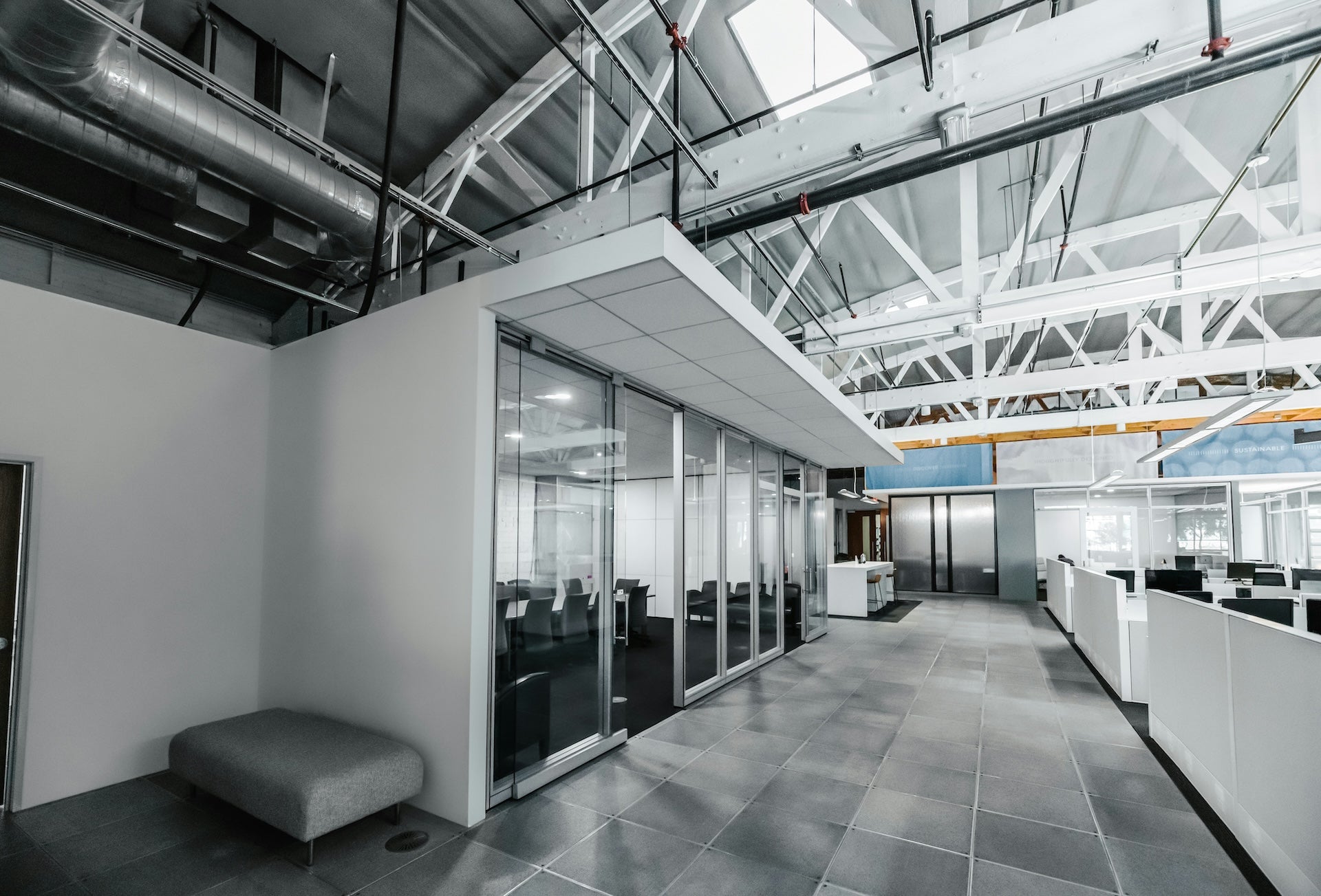
The mechanism is specific. Speech is uniquely disruptive because the brain involuntarily parses words, unlike a ventilation hum you can tune out. And the minimalist office finishes of the last decade, all glass partitions, exposed concrete and high ceilings, are hard reflective surfaces that amplify rather than absorb.
The design response is to zone by task on a foundation of surface treatment, treating sound as infrastructure rather than an afterthought. A UK survey reported 56 per cent of office workers describe their workplace as noisy and only 29 per cent feel the acoustics meet their needs, though those figures are best treated as indicative until the primary source is confirmed (reported via Resonics).
Both cases reframe acoustics from a wellbeing nicety to a business metric. A noisy restaurant loses reviews and repeat custom. A noisy office undermines the very return-to-office mandate it was built to support.
So for hospitality, design the acoustic zoning into the concept, not the snag list, and use the review-rating link as the business case, not an appeal to comfort. For workplaces, the evidence points to surface treatment plus task-based zoning as a system, not a single panel bolted to a wall.
And for anyone briefing an Australian project, the loudest data is imported. The lesson transfers cleanly, but the local measurement work has not been published. That is a gap in the market as much as in the literature.
What is actually changing in acoustic materials and construction?
The honest summary: acoustic function is being designed into other building elements rather than added on, materials are getting greener, and assembly is getting more industrialised. Most of the marquee product launches are international and not yet distributed in Australia, so the useful reading is the direction, not the shopping list.
On sustainability, the through-line matters more than the catalogue: embodied carbon and acoustic performance are now specified together rather than traded off. The clearest examples are BASF's Basotect EcoBalanced, a melamine acoustic foam with a product carbon footprint up to 50 per cent lower than standard grades (BASF), and, closer to home, CSR Woven Image's Soundstyle, an Australian-made decorative acoustic panel range from recycled PET (Building Connection, 31 October 2025).
Mass timber is the Australian construction story with the most direct acoustic content. A Glebe social housing development used more than 2,500 cubic metres of cross-laminated timber and glulam, is pursuing 6-Star Green Star, and carried a named acoustics consultant as a resourced workstream (The Fifth Estate, 7 July 2026).
The reason acoustics is a specific challenge here is physical. Timber is light, and lightweight floors transmit impact energy that concrete simply masses out.
Australian research is starting to answer it with local data. A Griffith University study supported by the Advance Timber Hub found that an access-floor build-up over a mass-timber floor cut measured vibration response by 16 to 22 per cent under walking loads, improved modal damping by around 25 per cent, and clearly improved impact-acoustic performance (Tate Global).

That local data matters because European and North American CLT test results do not map cleanly onto Australian code test methods, so local numbers are the ones that actually clear a compliance path. Internationally, StructureCraft's Acoustic Dowel-Laminated Timber builds an absorptive membrane into the panel underside, though it has no confirmed Australian distribution yet (Wood Central, 26 February 2025).
The certification layer points the same way. Green Star's voluntary apartment-to-apartment sound-transfer benchmark sits at around 55 dB, measured to ISO 16283-2 (GBCA).
The integration shift is visible in how ceilings and lighting are now procured together. Arktura's SoundForm modular acoustic system took acoustic and lighting awards at the 2026 NeoCon and Interior Design HiP cycles (Interior Design), and BuzziSpace showed BuzziBrella, an acoustic canopy for high-ceiling spaces, at NeoCon 2025 (BuzziSpace).
These sit inside a maturing category, with several manufacturers offering integrated lighting-and-absorption ceiling systems as a single line item rather than two separately detailed trades (Armstrong Ceiling Solutions).
Prefabrication is the third leg. The 2025-26 Australian Budget allocated 54 million dollars to prefabricated and modular housing, and Standards Australia consulted, closing January 2026, on a handbook to standardise prefabricated-building terminology at the Building Codes Board's request (Standards Australia). It reads as a precursor to more consistent acoustic and structural certification pathways for modular systems.
One category deserves a caution rather than a recommendation. Ventilated acoustic metamaterials combine an open airflow path with low-frequency sound insulation, historically an either-or trade-off, and they are advancing quickly in the peer-reviewed literature.
One ventilated metasurface design reports at least 5 dB of broadband insulation from 100 to 1700 Hz while keeping a central ventilation aperture open (AIP JASA Express Letters), and a separate resonance-based approach is documented in a Nature-group journal (npj Acoustics, 2025).
That is a genuine and exciting research pipeline. It is not yet a shipping product category, and the market-size figures circulating for it do not survive sourcing. The correct posture is to watch the facade and window applications this work is feeding, not to specify from it.
The material and assembly layers are converging on the same idea as the regulation layer. Acoustic function is being designed into the panel, the floor build-up, the ceiling grid and the factory module, rather than added as a remedial layer at the end.
So specify embodied carbon and acoustic performance as one requirement, because the market is now built to deliver both. Expect ceiling and lighting to arrive as a coordinated package, and brief them that way. And treat the international launches as signals of direction, not available products, until Australian distribution and local test data exist. A European CLT figure will not, on its own, clear an Australian compliance path.
Is AI actually changing acoustic engineering yet?
Yes, but narrowly, and the gap between what is shipping and what is a press release is the most useful thing a consultant can tell you this year. One category has genuinely crossed into commercial use, a second is a real and active research field that has not yet reached deployment, and a third does not exist as claimed.
This is the same upstream shift in software form. The simulation that runs before a brick is laid is sound moving upstream. The vapour is everything sold as AI that has not.
Start with what is real. The strongest verified thread is machine-learning and GPU-accelerated acoustic simulation. Treble Technologies runs a hybrid solver, full wave-equation simulation at low frequencies and geometrical acoustics at high frequencies, with claimed speed-ups over conventional wave-based solvers (Treble Technologies).
The signal that moved this from a vendor claim to a market-validated technology came in February 2025, when L-Acoustics, a major loudspeaker manufacturer, invested in Treble's Series A and integrated the simulation into its own system-design workflow (L-Acoustics). That is the clearest evidence yet of AI-accelerated simulation crossing from research into an established audio supply chain.
The second real category is active acoustics, or electronic architecture, where a room's reverberation is shaped by microphones, processing and loudspeakers rather than by its physical shape. This had its most concrete year yet.
Meyer Sound's Constellation was installed at Stockholm's Avicii Arena at large scale, with roughly 84 ceiling speakers, 72 microphones and 10 kilometres of cable (AVIXA, 23 February 2026), and in a combined Constellation and Dolby Atmos install at Grimstad Kulturhus in Norway (LightSoundJournal, 13 February 2025).
d&b's Soundscape lowered its price and complexity floor in 2025 with new I/O tiers and standalone design software, explicitly to reach houses of worship, clubs and restaurants rather than only flagship venues (AVNetwork).
The honest maturity read, from the industry's own trade coverage, is that immersive and active-acoustic audio is now widely accepted commercially, but full-building 360-degree systems remain rare outside flagship projects, held back by cost and content (ISE Europe).
Measurement has matured too. A 2025 peer-reviewed study validated the free NIOSH Sound Level Meter app against a calibrated meter and found high concurrent validity for screening and monitoring use (Scientific Reports, 2025), against a published accuracy specification of around 2 dBA (CDC/NIOSH).
The profession's own caveat still holds firm: a phone does not replace a certified Class 1 or 2 meter for compliance or legal evidence. Continuous IoT noise monitoring on construction sites is likewise now a normal commercial offering rather than an emerging one (Svantek case study).
Then the honest middle. AI for acoustic design and noise prediction is a real and funded research field, but deployment is thin. A Fraunhofer institute project with the Alte Oper Frankfurt is using machine learning to estimate room-acoustic parameters from live audio, but its own project page states it runs to February 2027 and is in development, not deployed (Fraunhofer IDMT).
Generative-model approaches to rapid urban noise mapping are advancing in the literature (Applied Acoustics, 2024), and the Journal of the Acoustical Society of America ran a dedicated special issue on generative and physics-informed AI for acoustics in June 2026 (AIP Publishing), a field-level signal that this is now a recognised direction.
But the simulation tools a working consultancy actually runs day to day show no publicly announced AI features as of this research. The acceleration is happening at the edges, a well-funded startup and academic papers, not yet inside the incumbent tools.
Finally, the part worth saying plainly. Some heavily marketed claims do not hold up under sourcing.
Take "drone-based facade sound-insulation testing." Direct searches turn up no evidence it is a real, in-use technique. Drones do inspect facades visually (RAND Engineering), and they are actively studied as noise sources to be detected and localised (MDPI Sensors, 2025, Acta Acustica, 2026). But facade sound insulation is still measured by the established laboratory and field methods (ISO 10140-2).
Manufacturer marketing that AI already "redesigns your room's acoustics" carries no named case study behind it. And a widely repeated claim that a major engineering firm introduced an AI acoustic-modelling platform cutting design time by around 30 per cent could not be verified against any primary source. That firm's actual, well-documented tool is a physical immersive listening room, not an AI platform (Arup SoundLab).
We have left that claim out rather than repeat it with a caveat, which is the standard this whole edition is held to.
The contrast between what is shipped and what is a paper or a patent is the single most decision-useful thing to hold onto. Adopting faster simulation and continuous monitoring today is a sound bet. Waiting for the incumbent tools to sprout an AI button, or specifying from a marketing claim, is not.
So treat faster wave-based simulation and always-on site monitoring as available now and worth building into workflow. Treat "AI-designed acoustics" as a claim to interrogate, not a capability to buy, until there is a named project behind it. And use smartphone measurement for screening and triage, never for the compliance number, where the certified meter is still the only defensible instrument.
What we are watching next month
The theme for July 2026 is that sound moved upstream, and the next few months will test how firmly it stays there. Five things are worth watching.
The pressure on Part F7 is now on the public record, so the early shape of the next code cycle, expected around 2028, is the standard to track. The first NSW Special Entertainment Precinct trials, Manly among them, are timed for mid-2026, which will turn the reform framework into real, testable sound criteria that other councils will copy or avoid.
Powerhouse Parramatta opens late this year, giving Australia a marquee cultural building whose acoustic design will be heard, not just specified. The Standards Australia prefabrication handbook consultation has closed, and its outcome is the first step toward consistent acoustic certification for modular construction.
And the research field around AI in acoustics has a visible marker in the June 2026 JASA special issue, against which next year's "AI in acoustics" claims can be measured for whether they shipped or stalled.
The consistent lesson underneath all of it is old and unglamorous: the buildings that sound right are the ones where someone thought about sound before the concrete was poured, not after the complaint was lodged.
Everything in this edition, the code pressure, the precinct reforms, the restaurant and office retrofits, the materials designed to absorb rather than added to, the simulation that runs before the build, is the market slowly, and then all at once, agreeing with that.
We will do this again next month.
Sources
- BNO News, "Why Companies Are Redesigning Offices for Sound, Not Just Space", 16 July 2026 - https://bnonews.com/index.php/2026/07/why-companies-are-redesigning-offices-for-sound-not-just-space/
- Boston Globe, "How restaurants got so noisy", 27 June 2025 - https://www.bostonglobe.com/2025/06/27/opinion/loud-noisy-restaurants/
- Resonics, office acoustics 2026 guide (citing the Oscar Acoustics / NBS office-worker survey) - https://resonics.co.uk/our-blog/the-ultimate-guide-to-office-acoustics-2026/
- Proceedings of Acoustics 2024, Australian Acoustical Society, "A Case for Review of Part F7 of NCC BCA 2022" - https://acoustics.asn.au/conference_proceedings/AAS2024/papers/p120.pdf
- Standards Australia, "National Construction Code (NCC) 2025 published" - https://www.standards.org.au/news/national-construction-code-ncc-2025-published-key-updates-for-australias-building-sector
- ABCB, NCC 2025 Part F7 Sound transmission and insulation - https://ncc.abcb.gov.au/editions/ncc-2025/adopted/volume-one/f-health-and-amenity/part-f7-sound-transmission-and-insulation
- ABCB, List of amendments - NCC 2025 - Volume One - https://ncc.abcb.gov.au/editions/ncc-2025/adopted/volume-one/preface/list-amendments-ncc-2025-volume-one
- NSW Government, "NSW to adopt new National Construction Code in May 2027" - https://www.nsw.gov.au/ministerial-releases/nsw-to-adopt-new-national-construction-code-may-2027
- Green Building Council of Australia, Green Star Buildings v1.1 Change log - https://www.gbca.org.au/get/resources/2496/82A463E60FB8E6E6B09AC3DDF943323F/
- International WELL Building Institute, WELL v2 Overview - https://www.wellcertified.com/certification/v2-pilot/
- NABERS, Indoor Environment - https://www.nabers.gov.au/ratings/our-ratings/nabers-indoor-environment
- Geonoise Asia, "ISO 3382-1 Committee Draft Released", 23 September 2025 - https://geonoise.asia/iso-3382-1-committee-draft-released-why-this-revision-matters-for-room-acoustics/
- AcousPlan, AS/NZS 2107 Acoustic Design Guide - https://acousplan.com/blog/as-nzs-2107-guide
- NSW Government, Vibrancy Reforms - https://www.nsw.gov.au/business-and-economy/office-of-24-hour-economy-commissioner/vibrancy-reforms
- NSW Government, Special Entertainment Precincts - https://www.nsw.gov.au/business-and-economy/office-of-24-hour-economy-commissioner/vibrancy-reforms/seps
- NSW Planning, Special entertainment precincts - https://www.planning.nsw.gov.au/policy-and-legislation/night-time-economy/special-entertainment-precincts
- Northern Beaches Council, Manly Special Entertainment Precinct - https://www.northernbeaches.nsw.gov.au/council/news/enhancing-manlys-night-time-economy-special-entertainment-precinct
- Victorian Government, Planning Practice Note 81 - https://www.planning.vic.gov.au/__data/assets/pdf_file/0024/97341/PPN81-Live-Music-and-Entertainment-Noise-April-2022.pdf
- NSW Government, Draft Noise Control Regulation 2026 - https://www.nsw.gov.au/have-your-say/draft-noise-control-regulation-2026
- School Infrastructure NSW, "$9.2 billion for new and upgraded public schools" - https://www.schoolinfrastructure.nsw.gov.au/news/2026/06/nsw-government-delivering--9-2-billion-for-new-and-upgr.html
- Sydney Times, "Record $3.6 Billion Health Investment" - https://www.sydneytimes.net.au/state-politics-and-government/nsw-state-government/nsw-state-news/record-3-6-billion-health-investment-keeps-nsw-hospital-rebuild-on-track/
- Australasian Leisure Management, Newcastle Arena design funding - https://www.ausleisure.com.au/news/nsw-government-funding-commitment-for-newcastle-arena-design-advances-plans-for-major-hunter-entertainment-venue
- Queensland Government, "Procurement commences for Gabba Entertainment Precinct" - https://statements.qld.gov.au/statements/103674
- NSW Government, Wollongong entertainment precinct - https://www.nsw.gov.au/ministerial-releases/world-class-entertainment-coming-to-wollongong
- Infrastructure Pipeline, Macquarie Point Stadium - https://infrastructurepipeline.org/project/regatta-point-multi-purpose-stadium
- ArchitectureAU, "Powerhouse Parramatta set to open late 2026" - https://architectureau.com/articles/powerhouse-parramatta-set-to-open-late-2026/
- BASF, Basotect EcoBalanced press release - https://www.basf.com/global/en/media/news-releases/2025/02/p-25-015
- Building Connection, "CSR launches eco-friendly wall panels", 31 October 2025 - https://buildingconnection.com.au/2025/10/31/csr-launches-eco-friendly-wall-panels-to-improve-home-acoustics/
- The Fifth Estate, "Australia can build mass timber social housing", 7 July 2026 - https://thefifthestate.com.au/innovation/architecture/projects/australia-can-build-mass-timber-social-housing-so-why-is-it-still-so-hard/
- Tate Global (APAC), Advance Timber Hub access-floor study - https://www.tateglobal.com/apac/insights-resources/case-studies/advance-timber-hub-study-ql-au/
- Wood Central, "The Acoustic Timber Panel", 26 February 2025 - https://woodcentral.com.au/the-acoustic-timber-panel-that-is-stronger-and-greener-than-clt/
- Green Building Council of Australia, Green Star Buildings v1 Rev A - https://www.gbca.org.au/get/resources/2367/CE2CA3ED3DB0302EB9947179D2DBB8A6/
- Interior Design, HiP Awards 2026 Arktura Acoustical Lighting - https://interiordesign.net/awards/hip/2026/arktura-acoustical-lighting/
- BuzziSpace, NeoCon 2025 - https://www.buzzi.space/inspiration/neocon-2025
- Armstrong Ceiling Solutions, Integrated Lighting Ceilings - https://www.armstrongceilings.com/commercial/en/systems/integrated-lighting-ceilings.html
- Standards Australia, prefabrication handbook consultation - https://www.standards.org.au/news/standards-australia-invites-comment-on-handbook-for-prefabricated-and-modular-construction
- AIP JASA Express Letters, "Ventilated acoustic metasurface with low-frequency sound insulation" - https://pubs.aip.org/asa/jel/article/3/7/073602/2904040/Ventilated-acoustic-metasurface-with-low-frequency
- npj Acoustics (Nature), "Resonance-based acoustic ventilated metamaterials for sound insulation", 2025 - https://www.nature.com/articles/s44384-025-00011-y
- Treble Technologies, Wave-Based Approach - https://docs.treble.tech/wave-based
- L-Acoustics, Treble Technologies partnership and investment - https://www.l-acoustics.com/press-releases/l-acoustics-and-treble-technologies-announce-strategic-partnership-and-investment/
- AVIXA, "Avicii Arena's Acoustic Modernization", 23 February 2026 - https://www.avixa.org/pro-av-trends/articles/avicii-arena
- LightSoundJournal, Grimstad Kulturhus Constellation and Dolby Atmos, 13 February 2025 - https://www.lightsoundjournal.com/2025/02/13/meyer-sound-constellation-and-dolby-atmos-installation-brings-new-flexibility-to-grimstad-kulturhus/
- AVNetwork, "d&b Soundscape Expands" - https://www.avnetwork.com/news/d-and-b-soundscape-expands-what-you-need-to-know
- ISE Europe, "The future of spatial audio in live events" - https://www.iseurope.org/news/future-spatial-audio-live-events
- Fraunhofer IDMT, AI-based real-time room acoustics project - https://www.idmt.fraunhofer.de/en/institute/projects-products/projects/room-acoustics-ai-adjustment.html
- ScienceDirect (Applied Acoustics), "A rapid approach to urban traffic noise mapping with a generative adversarial network", 2024 - https://www.sciencedirect.com/science/article/abs/pii/S0003682X24004195
- AIP Publishing, JASA special issue on Generative and Physics-Informed AI for Acoustics - https://pubs.aip.org/asa/jasa/pages/cfp030425
- Scientific Reports (Nature), NIOSH sound level meter app validation, 2025 - https://www.nature.com/articles/s41598-025-29111-1
- CDC/NIOSH, Sound Level Meter app - https://www.cdc.gov/niosh/noise/about/app.html
- Svantek, Construction Noise and Vibration Monitoring case study - https://svantek.com/case-studies/construction-noise-vibration-monitoring/
- RAND Engineering & Architecture, drone facade inspection fact sheet - https://randpc.com/articles/exterior-repair-and-maintenance/drone-fact-sheet/
- MDPI Sensors, "Performance Enhancement of Drone Acoustic Source Localization Through Distributed Microphone Arrays", 2025 - https://www.mdpi.com/1424-8220/25/6/1928
- Acta Acustica, "Passive acoustic detection and localization of drones", 2026 - https://acta-acustica.edpsciences.org/articles/aacus/full_html/2026/01/aacus250134/aacus250134.html
- Arup, SoundLab - https://www.arup.com/en-us/services/digital-solutions/soundlab/
- ISO 10140-2:2021, building-element sound insulation laboratory measurement - https://www.iso.org/standard/79487.html
This is general industry analysis, not project-specific acoustic advice. Figures and dates are current as at July 2026 and cited to their sources; regulatory positions and standards change, and any specific project should be assessed on its own facts by a qualified acoustic consultant.
Share:
AKA Acoustics Named Exclusive Australian Supplier of Phonic Acoustic Ceiling Tiles
Acoustics Futures - August 2026: The Ceiling the Laboratory Cannot See