
Place of Worship Acoustic Design: Churches, Prayer Halls and Sanctuaries
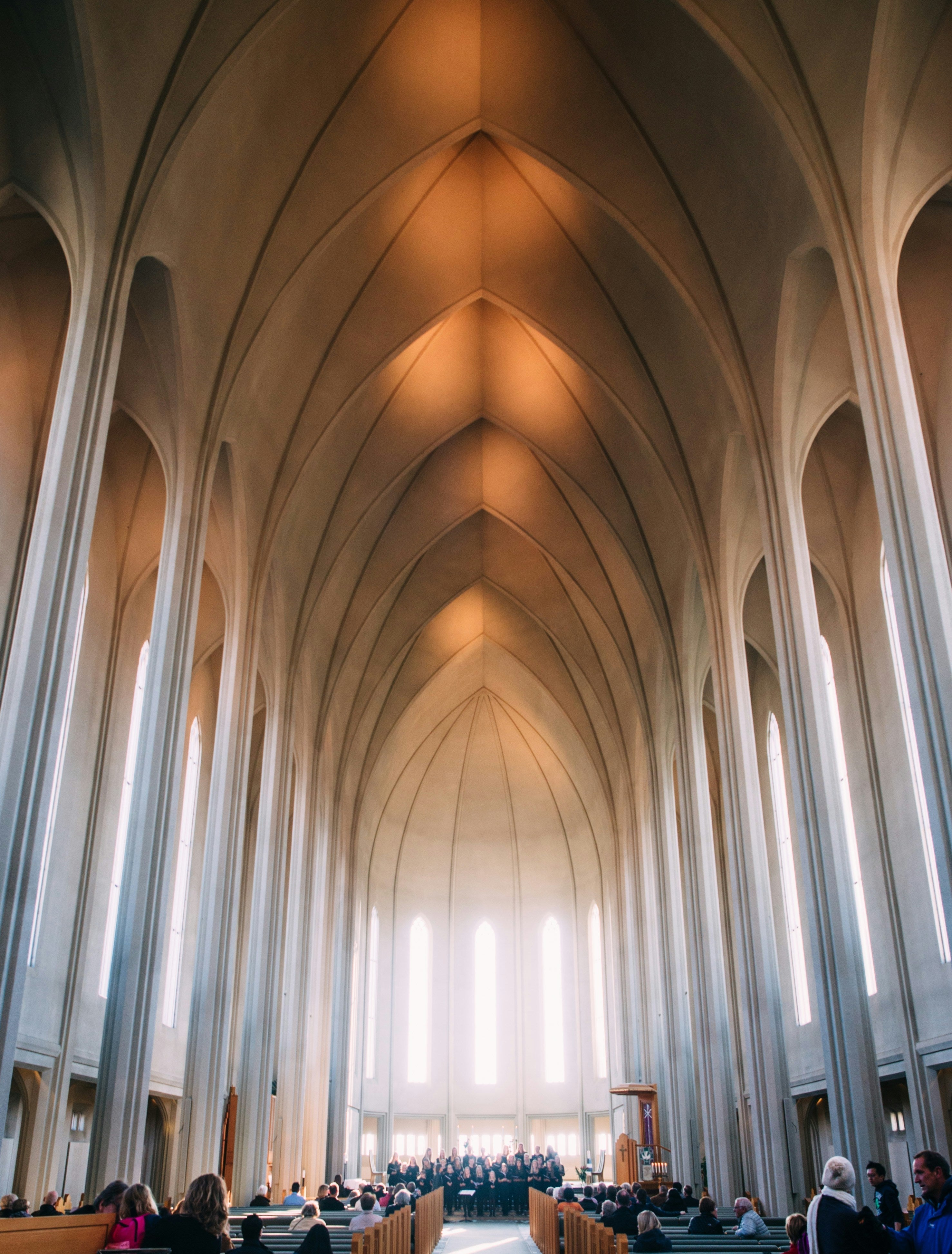
Place-of-worship acoustic design is the process of shaping a worship space so speech is intelligible, music has appropriate warmth, reverberation is controlled, background noise is low, and sound does not leak unreasonably into or out of the building. The difficult part is that many worship spaces need to support opposite acoustic outcomes: spoken word needs clarity and a short decay, while choir, organ, chant and congregational singing often need reverberance, blend and envelopment. The right answer is rarely acoustic treatment alone. It is a coordinated system of room geometry, reverberation control, sound isolation, low-noise services, loudspeaker design, specialist finishes, commissioning and measurement.
For a serious church, sanctuary, mosque, synagogue, temple, prayer hall or multi-faith space, acoustics should be considered before the room form, services routes, finishes and AV system are locked in. Once the architecture and building services are fixed, acoustic improvements usually become more expensive, more visible and less elegant. The earlier the acoustic intent is defined, the easier it is to protect the worship experience without compromising architecture, heritage fabric, construction programme or budget.
Planning a worship, sanctuary or performance space?
AKA coordinates the acoustic strategy, specialist materials, delivery partners, AV interfaces and commissioning pathway before the room is locked into costly decisions.
Contact AKA AcousticsCall 1300 039 639
What makes a place of worship acoustically good?
A good worship space resolves four acoustic outcomes at the same time: speech intelligibility, musical support, low background noise and appropriate sound isolation. None of these can be designed in isolation. A room with beautiful reverberance may make the sermon difficult to follow. A room treated too heavily for speech may make congregational singing feel weak. A high noise floor from air-conditioning can mask quiet liturgy and soft music. A loudspeaker system can improve clarity, but it cannot fully rescue poor room geometry, excessive reverberation or intrusive services noise.
For most worship projects, the useful design targets include:
- Speech intelligibility: normally assessed using Speech Transmission Index, or STI, with a target commonly above 0.60 where clear spoken-word communication is important.
- Reverberation time: selected for the room volume, occupancy and worship style, rather than copied from another church or auditorium.
- Early reflections: controlled so useful early energy supports speech and singing, while late reflections, slap echo and focusing are reduced.
- Background noise: managed so HVAC, plant, traffic and external noise do not mask quiet speech, prayer, chant or music.
- Sound isolation: designed so worship activity does not disturb adjoining spaces, and adjacent halls, childcare rooms, roads or mechanical plant do not disturb the service.
- Electroacoustic coverage: designed so amplified speech and music are distributed evenly, without relying on excessive volume.
The practical test is simple: every seat should understand the spoken word, the room should still support the music and ritual of that faith tradition, and the acoustic performance should remain stable during real services, not only during an empty-room demonstration.
What reverberation time should a worship space have?
There is no single correct reverberation time for a worship space. The target depends on room volume, occupancy, worship style, music style, whether speech is amplified, and how much acoustic variability the room can support. AS/NZS 2107:2016 is commonly used in Australia for recommended design sound levels and reverberation guidance for building interiors, while ISO 3382 measurement methods are used to verify room-acoustic parameters such as reverberation time and early decay time.
As a practical design range, contemporary worship spaces built around amplified speech and band-led music often sit shorter than traditional choir-and-organ sanctuaries. Traditional liturgical spaces may need a longer reverberant field to support organ, choir, chant and congregational singing. Multipurpose worship halls usually sit between the two, although a fixed compromise rarely serves both speech and music perfectly.
| Worship style | Typical acoustic direction | Design priority |
|---|---|---|
| Contemporary worship with amplified speech and band | Shorter, clearer and more controlled | Protect speech intelligibility, vocal clarity, amplified music control and even loudspeaker coverage. |
| Traditional liturgy, choir, chant and organ | Longer, warmer and more reverberant | Support musical blend, sustain, envelopment and congregational singing without losing spoken-word clarity. |
| Multipurpose worship hall | Moderate, flexible and use-dependent | Use variable acoustics, controlled finishes and AV design so the space can shift between speech, music, teaching and events. |
| Prayer hall or contemplative space | Highly dependent on geometry, floor finish and ritual use | Control focusing, flutter, excessive brightness and intrusive noise without over-deadening the room. |
Two cautions matter when comparing reverberation figures. First, an occupied room usually measures shorter than an empty room because the congregation adds absorption. Second, reverberation time is normally assessed across frequency bands, not as one universal number. A room may look acceptable at mid frequencies while still being boomy, harsh or unclear because the low-frequency or high-frequency decay is poorly controlled.
Why traditional and contemporary worship pull in opposite directions
Speech and music do not want the same acoustic conditions. Speech depends on direct sound and useful early reflections. Consonants are short, high-information sounds; when late reverberation dominates, words blur together and the congregation works harder to understand the message. Music, especially organ, choir, chant and congregational singing, often benefits from a longer reverberant field because it adds warmth, blend, sustain and a sense of shared participation.
This is why a worship space cannot be judged by reverberation time alone. A long reverberation time may be musically valuable, but only if early reflections, late decay, room geometry, focusing, background noise and sound reinforcement are controlled. A very dry room may test well for speech, but it can make congregational singing feel exposed and reluctant. The design task is to decide which acoustic condition the service actually needs, then build the room and sound system around that reality.
For rooms that genuinely need to support both traditional and contemporary modes, a single fixed acoustic setting is usually a compromise. Variable acoustics, carefully integrated with the PA system, is often the more defensible answer.

Can one worship space serve both speech and music?
Yes, but not by pretending one fixed reverberation time suits every use. A single space can support both spoken-word clarity and musical warmth when the room has variable acoustic control and the sound system is designed for the most difficult operating condition. The objective is to make the room shorter and clearer for preaching, teaching and amplified speech, then more live and supportive for choir, organ, chant or congregational singing.
Variable acoustic strategies can include:
- retractable absorptive banners or drapes;
- operable acoustic panels with reflective and absorptive faces;
- adjustable reflectors above platform, choir or congregation areas;
- coupled reverberation volumes that can be opened or closed;
- electronic acoustic enhancement where a physical solution is impractical or architecturally constrained;
- loudspeaker systems with directivity and delay control matched to the room’s acoustic behaviour.
The room and the sound system should not be treated as separate purchases. The acoustic design sets the reverberant field the loudspeaker must work inside. The loudspeaker design determines how much direct sound reaches the listener before the room dominates. If the two are designed separately, the project may end up with expensive treatment and expensive AV that still fail together.
How the sound system works with the acoustics
In a reverberant worship space, a loudspeaker system improves intelligibility by controlling where acoustic energy goes. It should place direct sound on the congregation and keep unnecessary energy off reflective walls, domes, vaults, ceilings and rear surfaces. Simply turning the system up does not solve the problem; it often excites the room further and makes the sound louder but not clearer.
For speech-heavy worship spaces, the system design usually considers:
- Direct-to-reverberant ratio: the balance between sound arriving directly from the loudspeaker and sound arriving after room reflections.
- Coverage uniformity: consistent level and tonal balance across the seating area, including rear seats, side seats and balconies.
- Vertical directivity: control of sound spill onto ceilings, vaults and domes.
- Delay alignment: timing between main loudspeakers, fills, choir monitors and distributed systems.
- Microphone strategy: lectern, lapel, handheld, choir and ambient microphones selected and placed to avoid feedback and preserve clarity.
- Commissioning: tuning the system in the actual finished room, not only modelling it before construction.
Column arrays, steerable systems, distributed loudspeakers and carefully controlled point-source systems can all be appropriate, depending on the architecture. The correct choice is not the loudspeaker type alone; it is the relationship between loudspeaker directivity, room volume, surface finishes, listener geometry, reverberation and ritual use.
Background noise: why silence is part of the design
A worship space needs a low enough background-noise level that quiet speech, prayer, chant, soft music and reflective moments are not masked. The most common sources are mechanical services, air movement, roof plant, traffic, rain noise, adjacent halls, kitchens, foyers and childcare spaces. In many projects, the worship experience is undermined less by visible acoustic treatment and more by untreated HVAC noise.
Good background-noise design includes low-noise air-conditioning, appropriate duct velocities, attenuators, vibration isolation, plant-room separation, sealed penetrations and coordination between the mechanical engineer, acoustic engineer, builder and installer. A worship space can meet a reverberation target and still feel poor if the air-conditioning hiss, fan rumble or external traffic noise is always present.
This is also where fragmented delivery creates risk. If the acoustic consultant sets a design criterion, the mechanical contractor changes equipment, the builder shifts a duct route, and nobody re-checks the final noise floor, the room can fail quietly. It may look complete, but the congregation hears the defect every week.
Sound isolation: keeping worship sound in and unwanted noise out
Sound isolation is different from acoustic treatment. Acoustic treatment controls reflections inside the room. Sound isolation controls transmission between spaces. A wall panel, fabric finish or ceiling tile may reduce reverberation, but it will not soundproof a church, prayer hall or sanctuary if the doors, glazing, roof, facade, penetrations or structure are weak.
For worship spaces, isolation normally needs to address three paths:
| Transmission path | Typical issue | Design response |
|---|---|---|
| Facade and roof | Traffic, aircraft, rain, external plant or neighbouring activity entering the worship space. | Mass, glazing selection, roof build-up, sealing, ventilation strategy and careful facade detailing. |
| Adjacent internal spaces | Noise transfer between sanctuary, hall, foyer, kitchen, office, school, childcare room or residential occupancy. | Rated partitions, acoustic doors, glazing, seals, ceiling junctions, services penetrations and flanking-path control. |
| Mechanical services and structure | Rumble, vibration, fan noise, duct breakout or structure-borne noise entering the room. | Plant isolation, duct silencers, flexible connections, resilient supports, equipment selection and commissioning checks. |
The weakest junction usually controls the result. A high-rated wall can be undermined by a poor door, unsealed cable penetration, shared ceiling void, lightweight roof path or rigidly connected structure. This is why a specification must define the system, the interfaces, the installation tolerance and the verification method, not only the headline product rating.
Heritage and listed-building constraints
Many worship buildings are architecturally or historically significant. Heritage constraints do not remove the need for acoustic performance, but they change the way it is achieved. Fixed, drilled, glued or visually dominant treatments may be inappropriate. The design has to work with the protected fabric rather than against it.
Common heritage-sensitive acoustic strategies include removable panels, reversible fixing methods, free-standing elements, fabric systems, concealed absorptive zones, micro-perforated panels, transparent or visually matched finishes, and careful placement of AV equipment. The heritage architect, acoustic team, builder, AV contractor and client should agree the acoustic intent before the design becomes a late-stage argument about visible treatment.
The best heritage acoustic design is usually restrained. It does not try to make a historic sanctuary look like a conference room. It protects speech, music, comfort and compliance while preserving what gives the building its character.

How do you know the finished worship space performs?
A worship space should be verified by measurement, not assumed to perform because the drawings were issued. Depending on the project scope, verification may include reverberation time, early decay time, clarity, background-noise measurements, STI, loudspeaker coverage, system tuning, isolation testing and commissioning documentation.
Room-acoustic measurements are normally taken from multiple positions across the seating plane so the result describes the congregation’s experience, not one favourable seat. This matters in worship spaces because the front rows, rear rows, side seating, balcony and under-balcony positions can behave very differently. A design target is useful, but an as-built measured record is what confirms whether the room actually achieved it.
Consultant-only, builder-led or integrated delivery?
Many worship projects are split between an acoustic consultant, architect, builder, product supplier, AV integrator, mechanical contractor and project manager. Each party may perform its own scope correctly, while the final acoustic result still suffers at the interfaces. RFIs, substitutions, undocumented site changes, penetrations, door details, AV placement and mechanical noise can all dilute the original intent.
The delivery model matters because worship acoustics sits at the junction of architecture, building fabric, services, AV, finishes and commissioning.
| Project model | Typical strength | Common risk | Where AKA adds value |
|---|---|---|---|
| Separate acoustic consultant | Independent advice, modelling and reporting. | Design intent can be diluted during procurement, substitution, construction or AV installation. | AKA carries the acoustic intent through specification, sourcing, coordination, construction interfaces, commissioning and measurement. |
| Builder-led delivery | Programme control and construction execution. | Acoustic systems may be treated as standard partitions, finishes or fit-out items. | AKA coordinates acoustic-critical junctions, penetrations, doors, glazing, finishes, tolerances and verification. |
| Product supplier only | Material availability and logistics. | A product may be selected without the correct build-up, detailing, installation method or performance check. | AKA connects product selection to room-acoustic targets, isolation requirements, buildability and site conditions. |
| AV integrator only | Technology deployment, cabling, equipment setup and system tuning. | The room, background noise, reverberation, isolation and geometry may limit the final result. | AKA coordinates the acoustic room, loudspeaker strategy, AV interfaces, finishes and commissioning together. |
| AKA integrated delivery model | Engineering, design, product selection, delivery coordination, AV integration and commissioning aligned from the start. | Requires early engagement and a clear performance brief. | One streamlined pathway from acoustic strategy to finished, measured worship environment. |
How AKA Acoustics approaches worship acoustic design
AKA Acoustics works as a turnkey acoustic delivery partner for high-performance rooms where acoustic intent, architecture, construction, specialist materials and AV need to align. For worship spaces, that means the work is not limited to writing an acoustic report. AKA coordinates the pathway from brief to performance: acoustic criteria, technical design, product selection, construction interfaces, specialist trades, AV and electroacoustic integration, commissioning, testing and handover documentation.
A typical worship-space process may include:
- Brief definition: confirm the worship style, speech requirements, music requirements, occupancy, service types, AV expectations, heritage constraints and isolation risks.
- Existing-condition review: assess room geometry, surface finishes, services noise, adjacent noise sources, reverberation, echo, focusing and current PA limitations.
- Acoustic strategy: set targets for reverberation, speech intelligibility, background noise, isolation, loudspeaker coverage and operational flexibility.
- Design and specification: define the treatment, finishes, isolation systems, doors, glazing, services noise controls, AV requirements and installation details.
- Supply and delivery coordination: source appropriate specialist products and coordinate the manufacturers, suppliers, trades and installers required to deliver the outcome.
- Construction interface control: protect acoustic-critical junctions, penetrations, substitutions, sequencing and tolerances during the build.
- Commissioning and measurement: tune, test and document the result so the room is assessed against the intended performance, not only its appearance.
This integrated model is particularly important in worship spaces because the final experience is won or lost where disciplines meet: the loudspeaker and the reverberant field, the acoustic treatment and the architecture, the door and the wall, the HVAC route and the noise criterion, the heritage constraint and the fixing method.
Need acoustic design, supply and delivery under one coordinated pathway?
Speak with AKA before the project is split across consultants, suppliers and trades with no single party protecting the final performance.
Contact AKA AcousticsCall 1300 039 639Specification and procurement notes
For architects, builders, project managers and facilities teams, a good worship acoustic specification should do more than name acoustic products. It should define the intended outcome, the construction build-up, the installation method, the acceptable substitutions, the junction requirements, the services-noise requirements and the measurement process.
Before appointing a supplier, consultant, builder or AV contractor, ask:
- Who owns the final acoustic outcome across room acoustics, isolation, services noise and AV?
- Are reverberation, STI, background noise and isolation targets clearly stated?
- Are acoustic treatment and sound isolation being treated as separate design problems?
- Has the PA system been designed for the room’s actual reverberation and geometry?
- Are acoustic doors, glazing, penetrations, ceiling voids and flanking paths detailed?
- Has the mechanical design been checked against the required background-noise level?
- Are heritage restrictions, fixing methods and visual impacts resolved before procurement?
- Will the finished room be measured and documented?
If those questions are not answered before tender or construction, the project is likely carrying avoidable acoustic risk.
What does worship acoustic design cost in Australia?
The cost of worship acoustic design depends on the performance target, project stage, existing site conditions, room volume, isolation requirement, services noise, vibration risk, heritage constraints, finish expectations, AV integration, documentation scope and whether AKA is engaged for advisory work, specialist product supply, delivery coordination, commissioning or a full turnkey pathway.
For a place of worship, the commercial question is rarely just “what does an acoustic report cost?” A low-cost review may identify reverberation, echo, speech-intelligibility or noise issues, but it will not necessarily carry the acoustic intent through specification, procurement, construction, AV integration, tuning and final measurement. The more fragmented the procurement model, the more important it is to define responsibilities, performance criteria and verification early.
A serious worship acoustic package may include existing-condition assessment, acoustic strategy, reverberation and intelligibility modelling, treatment design, sound-isolation advice, acoustic door and glazing coordination, services-noise review, loudspeaker strategy, product selection, construction documentation, specialist supply, site coordination, commissioning and as-built measurement. A contemporary church, traditional sanctuary, mosque, synagogue, temple, prayer hall or heritage-listed worship space may require very different levels of design and delivery responsibility.
AKA prices worship acoustic work after understanding the brief, risk profile, site constraints, procurement pathway and required level of accountability. For performance-critical spaces, the cost of acoustic design should be considered against the cost of getting the room wrong: unclear speech, weak congregational singing, intrusive services noise, inappropriate product substitutions, neighbour complaints, rework and a finished space that does not support the way the congregation actually worships.
Need a scoped acoustic pathway, not a guess?
AKA prices worship acoustic projects after understanding the performance target, site constraints, product requirements, delivery model and level of accountability required.
Contact AKA AcousticsCall 1300 039 639Frequently asked questions
What is place-of-worship acoustic design?
Place-of-worship acoustic design is the coordinated design of reverberation, speech intelligibility, music support, background noise, sound isolation, room finishes and sound reinforcement for churches, sanctuaries, prayer halls, mosques, synagogues, temples and multi-faith spaces. It is not just acoustic panels or a PA system. It is the relationship between the room, building fabric, services, finishes, AV and the way the congregation worships.
How do you fix echo in a church?
Echo in a church is fixed by identifying the reflection path first, then treating the surfaces that create late reflections, flutter echo, focusing or excessive reverberation. The solution may include absorptive panels, banners, drapes, diffusive surfaces, geometry changes, under-balcony treatment or loudspeaker reconfiguration. The aim is not simply to make the room dead; it is to improve clarity while preserving the musical support the worship style needs.
What reverberation time should a church have?
The correct reverberation time depends on the room volume, occupancy, worship style and music use. Contemporary amplified worship normally needs a shorter and clearer room than traditional choir, chant or organ-led worship. Multipurpose rooms often require variable acoustics because one fixed reverberation time can be too live for speech and too dry for music.
Can acoustic panels soundproof a worship space?
No. Acoustic panels can reduce reverberation and improve clarity inside the room, but they do not soundproof the building. Sound isolation depends on walls, roofs, floors, doors, glazing, seals, penetrations, flanking paths and structural connections. Treatment and isolation should be designed as separate but coordinated parts of the same acoustic strategy.
Why is speech hard to understand in many churches?
Speech is often hard to understand because late reverberation, echo, poor loudspeaker directivity, excessive background noise or uneven coverage masks consonants. The congregation may hear enough volume but not enough clarity. The solution is usually a combination of reverberation control, early-reflection management, quieter services and a sound system designed for the actual room.
Do churches need a special PA system?
Many churches need a sound system designed specifically for reverberant rooms, tall volumes, reflective surfaces, balconies, domes or heritage constraints. The system should control directivity, coverage, delay and microphone behaviour. A standard loudspeaker package may work in a simple hall, but it can fail in a large or highly reverberant sanctuary.
How are heritage worship spaces treated acoustically?
Heritage worship spaces are usually treated with reversible, visually sensitive and non-invasive acoustic interventions. These may include removable panels, discreet fabric systems, micro-perforated finishes, free-standing elements, carefully located loudspeakers and minimal fixing methods. The acoustic design should be coordinated with the heritage architect and approval pathway.
How do you prove a worship space performs?
Performance is proven through measurement and commissioning. Depending on the scope, this may include reverberation time, STI, background-noise level, loudspeaker coverage, isolation testing and system tuning. Measurements should be taken across representative listener positions, not only at one convenient location.
Who designs and builds worship acoustics in Australia?
Worship acoustics may be handled by acoustic consultants, architects, builders, AV integrators or product suppliers, but high-performance projects benefit from a coordinated model. AKA Acoustics works as a turnkey acoustic delivery partner, carrying the acoustic intent through design, specification, specialist material supply, construction coordination, AV interfaces, commissioning and measurement.
When should acoustic design start?
Acoustic design should start before the room shape, ceiling, services routes, glazing, doors, finishes and AV system are fixed. Early input allows the project team to protect acoustic performance through architecture and construction, rather than adding visible or expensive remedial treatment after the building is complete.
Discuss a worship acoustic project with AKA Acoustics
For churches, sanctuaries, prayer halls, auditoria and performance spaces where speech, music, architecture and delivery need to align, involve AKA early in the project.
Contact AKA AcousticsCall 1300 039 639

Share:
Theatre Acoustic Design: A Complete Guide for Performance Spaces
Hotel Acoustic Design in Australia: Guest Rooms, Walls, Floors, Doors and Noise Control